
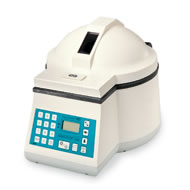
Blood Bank Serofuge
A Serofuge is laboratory equipment used in blood bank processing. Centrifuging the serum from whole blood red cells is the first testing step in rouleaux detection, agglutination grading and direct antibody identification.
Serofuges look similar, but various models can perform differently, even at the same setting. Environmental factors such as humidity may be considered when calibrating. Each benchtop centrifuge needs to be calibrated individually for each technique that is used. That will ensure that the optimum length of spin will be achieved in order that clear cut agglutination is produced without it causing false negatives or positives.
In general, 10 x 75mm test tubes are used for agglutination grading. 12 x 75mm test tubes are the only size that should be used for setting up serological titers and red cell washing. Blood banking centrifuges such as the Clay Adams Serofuge should normally be run at speeds of between 3400 and 3500 RPM when they are used for red cell washing and for grading. 1000g is the force or RCA that is recommended for agglutination grading with glass culture tubes.
Please Note: When determining the proper force to use, please refer to the collection tube and reagent manufacturer’s guidelines. Glass test tubes require centrifuging for 20 to 30 seconds in order to achieve proper blood bank agglutination grading. The general consensus is that the longer that glass test tubes are spun, the better the results will be. Centrifuges are set to different speeds for the forming of mono layers (1000 RPM) in solid phase testing and for whole blood separation. The RCA for elution’s and other blood bank test is determined by manufacturer’s directions.
Benchtop style centrifuges with fixed head rotors of 45 degrees are used for agglutination grading. Serofuge angled heads move the cells along the side of the test tube bottom for easier viewing. Swinging head rotors disturb the agglutinate button. Swinging head rotors are recommended when the centrifuge is used for the initial separation of plasma and red blood cells in blood bag centrifuges. Collection tube centrifuges also require a ” swing out rotor.” Angled rotors may leave the blood at angle thus effecting automated testing.
Centrifuge heads that are removable are recommended for agglutination grading. Removable rotor heads provide direct viewing into the test tubes that reagents are added too. Removable serofuge rotor heads may be not appropriate for student teaching purposes. Removeing the rotor head may disturb the cell button which may adhere consistent viewing that is needed while learning proper cell grading.
Removable decanting rotor heads that hold 10-12mm tubes tightly may be used for manual cell washing. One may take the whole rotor head that hold 12mm tubes tightly to dump or decant to speed up the washing process. The use of a rubberband wrapped around the top of tubes may also work on rotor heads that have a greater diameter to hold them in place when manually decanting.
Generally, blood bank centrifuge heads will hold up to a maximum of 12 test tubes. Collection tube centrifuges may hold up to 48 tubes. Cell washers may hold 12-24 test tubes.
Cell washers are large centrifuges when compared to serofuges. Automated cell washer requires a drain and a source of saline and or generally more expensive. Automated cell washers are faster for decanting but may not be appropriate for washing stroma or poly clonal sources.
In conclusion, the technologist must determine what centrifuge is appropriate for the test. Cost, space, experience, reagent and volume of test are all considerations.